
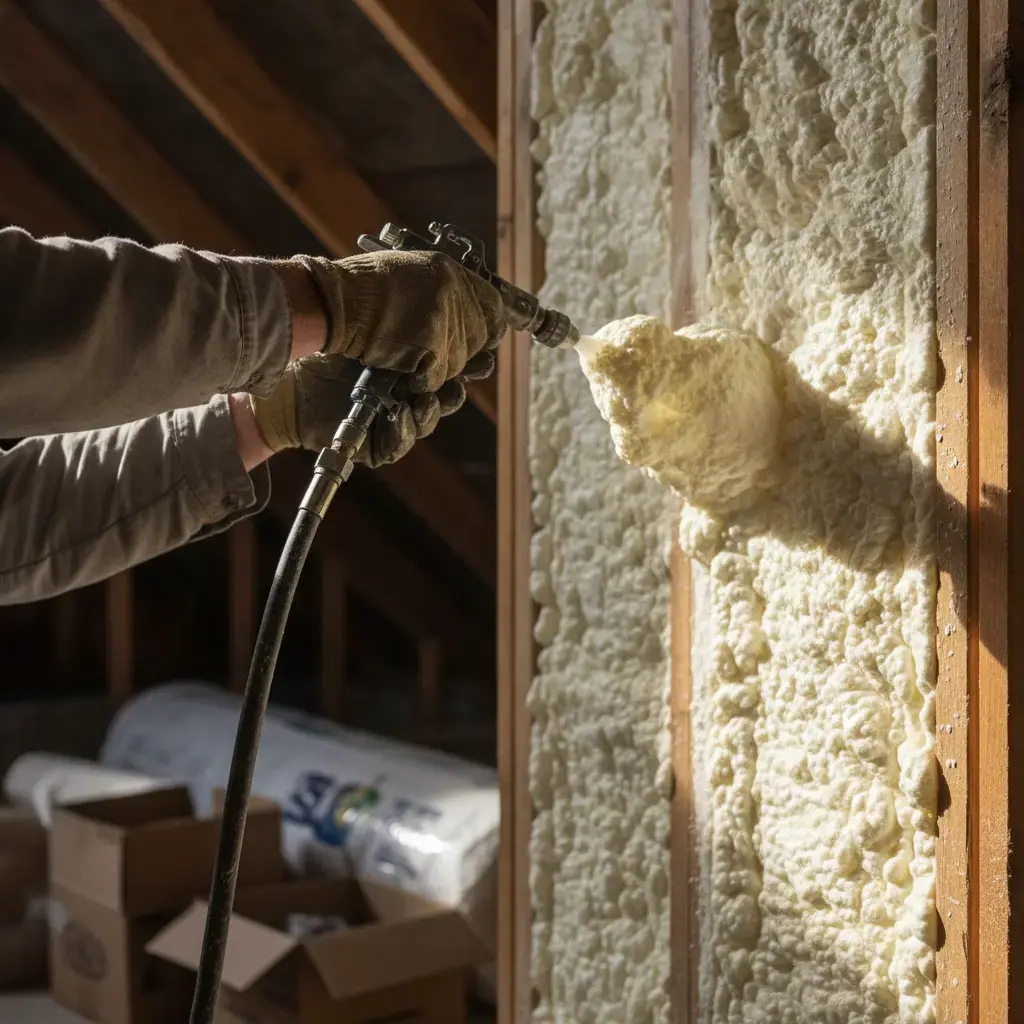
Mineral Wool Insulation in Cerritos, CA
Energy-Saving Mineral Wool Insulation for Cerritos, CA Homes — Licensed & Insured
Need mineral wool insulation in Cerritos, CA? Golden Touch Attic Insulation offers expert installation, removal & replacement. Call (562) 442-2433 for a free estimate.
Mineral wool insulation — also known as rock wool or stone wool — is a high-performance thermal and acoustic insulation material manufactured from volcanic rock, slag, or a combination of both. When properly installed, it delivers outstanding fire resistance, superior soundproofing, and long-lasting thermal control that other insulation types simply cannot match.
In Cerritos, CA, where summer temperatures regularly push past 95°F and the marine layer from nearby Long Beach creates persistent moisture challenges, mineral wool’s natural moisture resistance and dimensional stability make it an especially smart investment for local homeowners and commercial property owners alike.
At Golden Touch Attic Insulation, our team specializes in bringing the full performance potential of mineral wool to Cerritos properties — from the post-1960s tract homes near Bloomfield Avenue to the newer commercial corridors along Studebaker Road. We understand the local building stock, the regional climate quirks, and the specific code requirements that apply here in Los Angeles County.
Understanding Mineral Wool Insulation
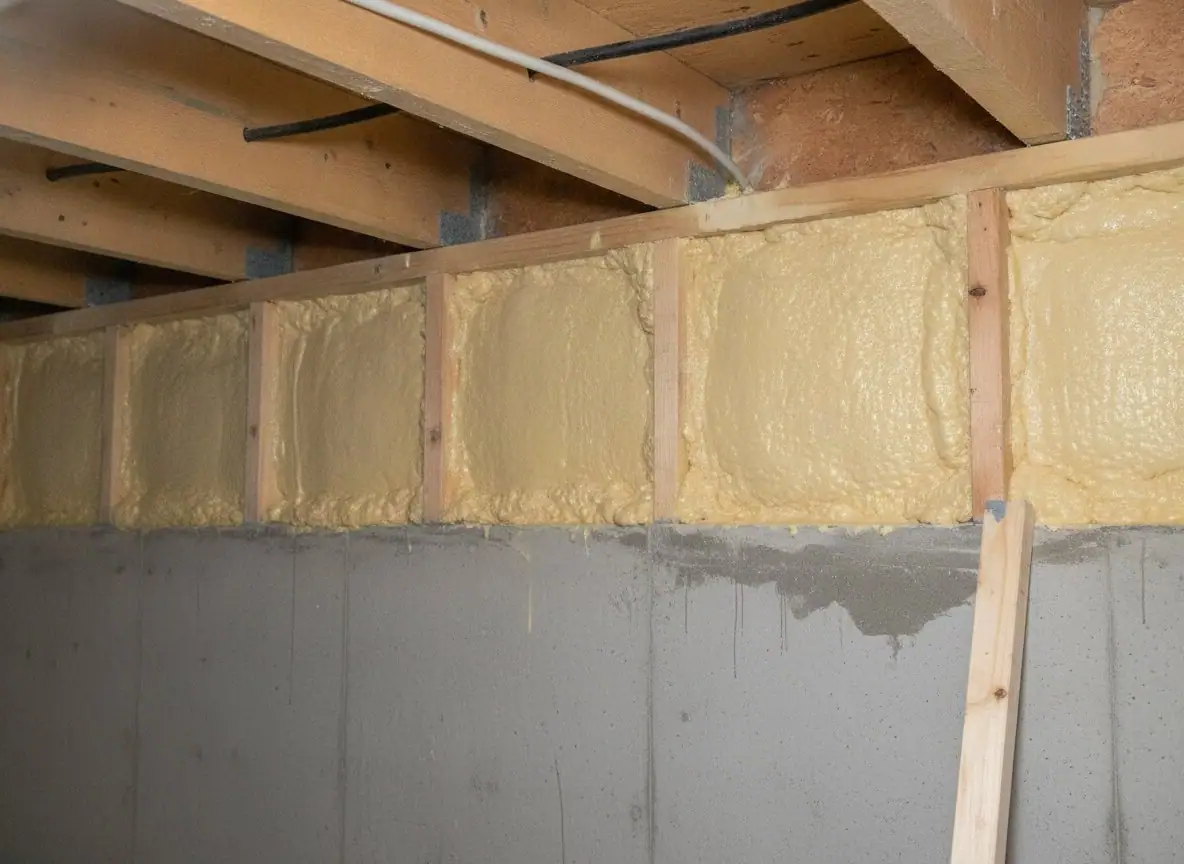
Mineral wool insulation has been used in construction for well over a century, with commercial manufacturing beginning in Europe in the late 1800s. By the mid-20th century, it had become a standard material in industrial and residential construction across North America. Unlike fiberglass, which is made from fine glass fibers, mineral wool is produced by melting basaltic rock or blast-furnace slag at temperatures exceeding 2,700°F, then spinning the molten material into dense, interlocking fibers.
This manufacturing process gives mineral wool several inherent advantages. First, it is naturally non-combustible and can withstand temperatures up to 1,800°F without melting or releasing toxic fumes — a critical safety feature for California properties subject to strict Title 24 fire regulations. Second, its dense fiber structure provides an R-value of approximately R-3.7 to R-4.2 per inch, slightly outperforming standard fiberglass batts. Third, the material’s open-cell structure allows water vapor to pass through without retaining liquid moisture, which prevents mold and mildew growth over time.
Read moreShow less
In the context of Cerritos specifically, mineral wool’s acoustic properties are a major selling point. The city sits within the flight path influence zone of Long Beach Airport (LGB), approximately 8 miles to the southwest. Residents in communities near 183rd Street and Del Amo Boulevard have long dealt with elevated ambient noise levels. Mineral wool’s Sound Transmission Class (STC) ratings — typically between 45 and 52 when used in wall assemblies — can meaningfully reduce airborne noise transmission compared to conventional fiberglass, which typically achieves STC ratings in the 37–44 range.
Mineral wool comes in several product forms relevant to Cerritos properties: semi-rigid batts designed for standard stud-bay framing (common in the city’s 1960s–1980s residential housing stock), rigid board insulation for continuous exterior applications, and loose-fill mineral wool for retrofitting existing wall cavities. Each form serves a distinct application, and choosing the right one depends on the property’s construction era, existing insulation condition, and energy performance goals.
For attic applications — one of the most common needs in Cerritos — attic insulation services using mineral wool batts or blown-in mineral fiber can dramatically improve a home’s thermal envelope. For below-grade and crawl-space settings, crawl space insulation with mineral wool board is often the preferred approach given the material’s inherent moisture resilience.
Why Mineral Wool Insulation Is Needed in Cerritos, CA
Cerritos Climate: The Marine Layer and Thermal Swing Problem
Cerritos experiences a semi-arid Mediterranean climate (Köppen classification BSk/Csa boundary), but its proximity to the coast — roughly 12 miles from the Pacific — means the marine layer regularly pushes inland from late spring through early summer, a phenomenon locals call “June Gloom.” Morning relative humidity in Cerritos during May and June frequently sits between 80% and 90%, while afternoon temperatures can surge to 90°F or higher within a matter of hours. This rapid thermal swing — sometimes 30°F or more within a single day — stresses conventional insulation materials that absorb and release moisture, degrading their R-value over time.
Mineral wool’s hydrophobic fiber coating repels liquid water while allowing vapor to pass, meaning it maintains its rated R-value even during Cerritos’s most humid marine-layer mornings. Fiberglass batts, by contrast, can lose up to 40% of their effective R-value when moisture content rises above 1% by weight — a real risk in Cerritos attics and crawl spaces during the late-spring humidity season.
The 2021 Heat Dome and Energy Code Implications
During the Western U.S. heat dome event of late June 2021, Cerritos recorded temperatures of 106°F — among the highest in recorded local history. The event drove extraordinary cooling loads on homes built under older energy codes (pre-Title 24 2016) that permitted lower insulation R-values. Homes in the Carmenita neighborhood north of 183rd Street and in the South Cerritos residential tracts along Gridley Road reported indoor temperatures exceeding 85°F even with central air conditioning running continuously. This event exposed just how inadequate older attic insulation levels — often R-11 to R-19 fiberglass batts installed in the 1970s — truly are.
California’s current Title 24 energy code (2022 update) now requires attic insulation levels of R-38 to R-49 for climate zone 8, which encompasses Cerritos. Upgrading to mineral wool in the attic allows homeowners to meet or exceed this standard while also gaining fire resistance and acoustic performance that a simple blown-fiberglass upgrade cannot provide.
Soil and Foundation Conditions
Much of Cerritos sits on expansive alluvial soils deposited by the historic San Gabriel River delta. The Los Angeles County Geologic Hazard mapping identifies portions of Cerritos — particularly near the Cerritos Center for the Performing Arts and the Civic Center corridor — as underlain by soils with moderate to high liquefaction potential. This soil movement history means many older homes have experienced minor foundation shifts that create gaps in original batt insulation in wall cavities and crawl spaces. Mineral wool’s semi-rigid batt format is dimensionally stable enough to maintain contact with framing members even after minor structural movement, reducing the thermal bridging that occurs when standard fiberglass batts compress or shift.
Noise Pollution from LGB and I-605
The Interstate 605 freeway runs along Cerritos’s eastern boundary, and the noise contours published by Caltrans show a 65 dB(A) CNEL (Community Noise Equivalent Level) zone extending approximately 500 feet west of the freeway — covering residential streets in the South Street corridor and neighborhoods near Shoemaker Avenue. Combined with Long Beach Airport approach noise, properties in eastern and southern Cerritos face persistent exterior noise levels that degrade quality of life. Mineral wool insulation in wall assemblies and attic floors is one of the most cost-effective strategies for reducing interior noise levels by 10–15 dB(A) — a perceptible and meaningful improvement for affected residents.
Free, no-obligation estimates
Talk to Golden Touch Attic Insulation
Tell us what you need and we’ll take it from there.
Signs You Need Mineral Wool Insulation in Cerritos
Energy Performance Indicators
- Monthly summer electricity bills exceeding $180–$220 for a standard 1,500–2,000 sq. ft. Cerritos home, especially from June through September
- Upstairs rooms or attic-adjacent bedrooms remaining 5°F or more warmer than downstairs living areas during peak afternoon heat
- HVAC system running nearly continuously on days above 90°F without adequately cooling the home
- Visible daylight gaps or compressed/flattened fiberglass batts in the attic or crawl space
Moisture and Air Quality Indicators
- Musty odors emanating from attic spaces, especially after marine-layer mornings in May or June
- Visible condensation on interior walls or ceilings during Cerritos’s rare winter cold snaps (below 45°F nights)
- Evidence of rodent or pest infiltration through damaged batt insulation, common in older Cerritos tract homes near open drainage channels
Acoustic Indicators
- Clearly audible freeway noise from I-605 or aircraft noise from LGB approach paths inside bedrooms with windows closed
- Neighbor-to-neighbor sound transmission clearly audible through shared walls in Cerritos condominiums or townhome developments
Urgency Indicators
- Existing insulation is original to a pre-1980 build — replacement is overdue regardless of visible condition
- Any visible mold or water staining on existing insulation material — remove and replace immediately
Our process
Our Mineral Wool Insulation Installation Process in Cerritos
Golden Touch Attic Insulation follows a systematic, field-tested process tailored to the specific demands of Cerritos properties. Here is what to expect from the moment you contact us through completed installation.
- 01
Free On-Site Assessment (Day 1, 60–90 Minutes)
Our technician visits your Cerritos property to evaluate existing insulation condition, attic ventilation, air sealing status, and moisture levels. We use a calibrated thermal imaging camera and moisture meter to identify hidden deficiencies not visible to the
- 02
Custom Scope and Proposal (Within 24–48 Hours)
Based on the assessment, we prepare a written proposal specifying mineral wool product type (batt, rigid board, or blown), R-value targets per California Title 24 2022 requirements for climate zone 8, and total project cost. We document existing R-values so yo
- 03
Old Insulation Removal (Day 1 of Installation, 2–4 Hours)
Where existing insulation is degraded, moisture-compromised, or pest-contaminated, we perform insulation removal first. We use industrial vacuum equipment that captures debris in sealed bags, preventing airborne particulates from spreading through your Cerrito
- 04
Air Sealing (Day 1, 1–2 Hours)
Before installing mineral wool, our crew seals all penetrations — recessed light fixtures, top plates, plumbing chases, and HVAC boot connections — using two-part polyurethane foam and fire-rated caulk. Air sealing alone can reduce a Cerritos home’s energy los
- 05
Mineral Wool Installation (Day 1–2, 3–6 Hours Depending on Scope)
Mineral wool batts are cut and friction-fit into attic floors, wall cavities, or crawl space framing bays as applicable. Our technicians wear appropriate PPE and follow manufacturer installation specifications to ensure full contact with framing members withou
- 06
Quality Verification and Documentation (Day 2, 1 Hour)
We perform a post-installation inspection including thermal imaging to confirm complete coverage with no gaps or voids. We provide you with written documentation of installed R-values for your records, useful for Title 24 compliance verification or future home
- 07
Cleanup and Final Walkthrough (Day 2, 30 Minutes)
We leave your Cerritos property clean and fully briefed. We review maintenance recommendations specific to your installation and answer any remaining questions before departing.
Mineral Wool Insulation Methods and Approaches
Mineral Wool Batt Installation
The most common approach for Cerritos’s residential market, mineral wool batts (available in 2×4 and 2×6 framing widths) are ideal for open attic floors and accessible wall cavities. Batts are available in R-15, R-21, R-23, and R-30 configurations. For attic floors, we commonly layer two courses of R-19 or R-21 batts to achieve the R-38 to R-49 target required by Title 24 for climate zone 8. This method is cleanest and most suitable for occupied homes where dust minimization is a priority.
Mineral Wool Rigid Board
For continuous insulation applications — exterior sheathing, crawl space walls, or garage ceiling assemblies — mineral wool rigid board delivers a thermal break across framing members that batts alone cannot achieve. This approach is particularly valuable in older Cerritos homes where wall framing creates significant thermal bridging at every stud bay.
Blown-In Mineral Wool
For retrofitting existing closed wall cavities in Cerritos homes built before 1990 — where removing drywall is not practical — blown-in loose-fill mineral wool is the appropriate solution. Small access holes are drilled between studs, loose mineral wool fiber is blown in under controlled pressure, and holes are patched and painted. This approach is also used for dense-pack attic applications where extremely high R-values are needed in limited depth scenarios.
Combined Mineral Wool and Spray Foam Systems
For maximum performance, we sometimes pair mineral wool batts with a thin flash of spray foam insulation on the attic deck to create a continuous air and vapor barrier before installing mineral wool over the top. This hybrid approach is especially effective in Cerritos homes near the I-605 corridor where both air infiltration and noise control are primary concerns.
Mineral Wool Insulation Cost in Cerritos, CA
Understanding the cost of mineral wool insulation in Cerritos helps you plan your investment and compare bids accurately. Below are current general pricing ranges based on typical Cerritos project conditions as of 2024.
Typical Price Ranges
- Attic mineral wool batt installation (new install, no removal): $1.80–$2.80 per square foot, or $2,700–$5,600 for a typical 1,500–2,000 sq. ft. Cerritos attic floor
- Attic insulation including removal of old material: Add $0.50–$0.90 per square foot for insulation removal and replacement
- Wall cavity mineral wool batt (open stud bays, during renovation): $1.50–$2.40 per square foot of wall area
- Blown-in mineral wool for closed wall retrofit: $2.50–$4.00 per square foot of wall area, including patching
- Crawl space mineral wool board insulation: $3.00–$5.50 per square foot for crawl space insulation depending on access difficulty
Read moreShow less
Factors That Affect Mineral Wool Insulation Cost in Cerritos
- Attic access difficulty: Many Cerritos tract homes built in the 1960s–1970s have low-pitch roofs with 18–24 inch attic clearances that require additional labor time
- Existing insulation condition: Heavily contaminated or rodent-damaged insulation increases removal costs
- Project scope: Combined attic, wall, and crawl space projects typically earn volume discounts of 10–15%
- Material R-value specification: Higher-rated products cost more per batt but may be required for Title 24 compliance
California homeowners may qualify for rebates through the LADWP or SoCalGas Energy Efficiency programs, which can offset $200–$800 or more on qualifying insulation upgrades. Ask our team about current rebate availability when you call (562) 442-2433.
Cerritos Neighborhoods We Serve
North Cerritos / Carmenita Area
Homes along Carmenita Road north of 183rd Street were largely built between 1965 and 1978 and typically feature original R-11 or R-13 blown fiberglass in the attic — far below current Title 24 minimums. These properties also tend to have unencapsulated crawl spaces prone to moisture accumulation from Cerritos’s marine-layer humidity. Mineral wool batt upgrades combined with crawl space encapsulation are the most common combined project in this neighborhood.
South Cerritos / Gridley Road Corridor
The residential tracts along Gridley Road south of 183rd Street include a mix of 1970s single-story homes and 1990s two-story builds. The older single-stories here are particularly affected by I-605 noise from the nearby freeway interchange. Mineral wool wall batts installed during kitchen or bathroom renovations consistently rank as a high-value upgrade for these residents.
Cerritos Towne Center Adjacent Residences
Properties near the Cerritos Towne Center on South Street include both older residential properties and newer attached townhomes built in the 2000s. Townhome owners frequently inquire about party-wall acoustic insulation — an area where mineral wool rigid board and dense-pack blown applications excel.
Mineral Wool Insulation Maintenance Tips for Cerritos Homeowners
- Annual attic inspection every October: Check for pest entry points before Cerritos’s cooler, wetter November–February season drives rodents indoors. Seal any gaps at eaves or ridge vents immediately.
- Monitor attic moisture during June Gloom: Use an inexpensive hygrometer placed in your attic to verify humidity stays below 60% during Cerritos’s marine-layer season. Readings above 70% suggest ventilation improvement is needed.
- Keep attic ventilation clear: Do not block soffit vents with stored items. Proper attic airflow is essential to prevent heat buildup during Cerritos summers and moisture accumulation in winter.
- Inspect crawl space moisture barriers annually: If you have crawl space encapsulation, inspect the vapor barrier each spring for tears or standing water from winter rainfall.
- Do not compress mineral wool batts with stored items: Compression reduces R-value. Maintain at least 6 inches of clearance above attic floor insulation if using the space for limited storage.
- Re-check R-values after any HVAC or plumbing work: Contractors working in your attic or crawl space sometimes disturb insulation. Verify coverage remains intact after any major mechanical work.
- Clean HVAC filters monthly in summer: A clean HVAC system works with your insulation rather than against it during Cerritos’s 90°F+ summer months.
Why Choose Golden Touch Attic Insulation in Cerritos
Golden Touch Attic Insulation is a locally focused insulation contractor serving Cerritos and the surrounding communities of the Southeast Los Angeles Basin. We are not a national franchise — we are a team that works in these neighborhoods every day, familiar with the specific building types, energy code requirements, and climate challenges that Cerritos property owners face.
Our crew members are trained in the installation of mineral wool products from leading manufacturers and follow California Title 24 compliance protocols on every project. We stay current with Los Angeles County building department requirements and Southern California Edison and SoCalGas rebate programs so you don’t have to.
Read moreShow less
We offer comprehensive insulation services under one roof — from insulation removal and blow-in insulation to spray foam insulation and crawl space encapsulation — meaning you work with one trusted team from assessment through completion rather than coordinating multiple contractors.
Call us at (562) 442-2433 to speak directly with a Cerritos insulation specialist and schedule your free on-site assessment.
FAQ
Frequently Asked Questions About Mineral Wool Insulation in Cerritos
How much does mineral wool insulation cost in Cerritos?
In Cerritos, mineral wool batt installation for a typical attic ranges from $1.80 to $2.80 per square foot for new installation, translating to approximately $2,700–$5,600 for a 1,500–2,000 sq. ft. attic floor. Projects that include old insulation removal will add $0.50–$0.90 per square foot. Exact costs depend on attic access, existing insulation condition, and the R-value specification required by California Title 24 for climate zone 8.
Is mineral wool better than fiberglass for Cerritos homes?
For most Cerritos properties, yes. Mineral wool outperforms fiberglass in three key areas that matter locally: fire resistance (critical for California’s wildfire risk environment and strict Title 24 regulations), moisture resistance (important given Cerritos’s marine-layer humidity), and acoustic performance (valuable for homes near the I-605 freeway or Long Beach Airport flight paths). Mineral wool also maintains its R-value more consistently over time in humid conditions.
How long does mineral wool insulation last in Cerritos?
Mineral wool insulation has an expected service life of 50+ years under normal conditions. Unlike fiberglass, it does not deteriorate when exposed to the humidity cycles common in Cerritos attics during June Gloom season, and it does not sag or settle over time, which means your R-value investment remains intact for decades.
Do I need a permit to install mineral wool insulation in Cerritos?
In most cases, attic insulation upgrades in Cerritos do not require a building permit if no structural work is involved. However, if the project includes air sealing work or modifications to attic ventilation, Los Angeles County may require a permit. Our team handles all necessary permit inquiries on your behalf and ensures all work meets current Title 24 energy code requirements.
How long does the installation take for a typical Cerritos home?
A standard attic mineral wool installation in a 1,500–2,000 sq. ft. Cerritos home — including old insulation removal and air sealing — is typically completed in one to two days. Wall cavity or crawl space projects add time depending on scope. We provide a specific timeline estimate in your written proposal before any work begins.
Can mineral wool insulation reduce noise from the I-605 freeway?
Yes, significantly. Mineral wool installed in wall assemblies adjacent to exterior noise sources can achieve STC ratings of 45–52, which translates to a perceived noise reduction of 10–15 dB(A) compared to uninsulated walls. For homes on Shoemaker Avenue or South Street near the I-605 corridor, this can make a meaningful difference in interior comfort.
Is mineral wool insulation safe for my family?
Modern mineral wool insulation products are classified as non-carcinogenic by the International Agency for Research on Cancer (IARC) and are safe once installed. During installation, our technicians wear appropriate PPE and take precautions to minimize fiber exposure. Once the material is in place and covered, there is no ongoing exposure risk for occupants.
Do you serve areas near Cerritos like Artesia or Lakewood?
Yes. Golden Touch Attic Insulation serves a broad service area throughout the Southeast Los Angeles Basin, including Artesia, Lakewood, Norwalk, Bellflower, Downey, La Mirada, Hawaiian Gardens, Paramount, Santa Fe Springs, Signal Hill, Whittier, Buena Park, Cypress, La Palma, Los Alamitos, and Stanton, in addition to Cerritos.
Get Your Free Mineral Wool Insulation Estimate in Cerritos Today
If your Cerritos home is losing energy through an under-insulated attic, struggling to stay cool during heat events like the summer spikes that have become increasingly common in the Los Angeles Basin, or letting in freeway and airport noise that disrupts daily life, mineral wool insulation is likely your best solution.
Golden Touch Attic Insulation is ready to help. Our team serves Cerritos and surrounding communities throughout the Southeast Los Angeles Basin, and we bring genuine local knowledge to every project we take on.
Call us now at (562) 442-2433 to speak with a Cerritos insulation specialist and schedule your free, no-obligation on-site assessment. We will evaluate your property, explain your options clearly, and provide a written estimate — all at no cost to you.
Don’t let another Cerritos summer pass with inadequate insulation. Contact Golden Touch Attic Insulation today.
Get in touch
Find insulation help near you
Request a free estimate online or give us a call — our team will follow up quickly.
- Call us(562) 442-2433
- Visit13810 Bentley Pl, Cerritos, CA 90703
- HoursMon-Sun 07:00-19:00